Back to home

Passive Low-Altitude Security

Acoustic Drone Detection Systems

New Ark acoustic detection systems use passive microphone arrays and AI recognition to detect, classify, and localize UAV activity without transmitting electromagnetic signals.

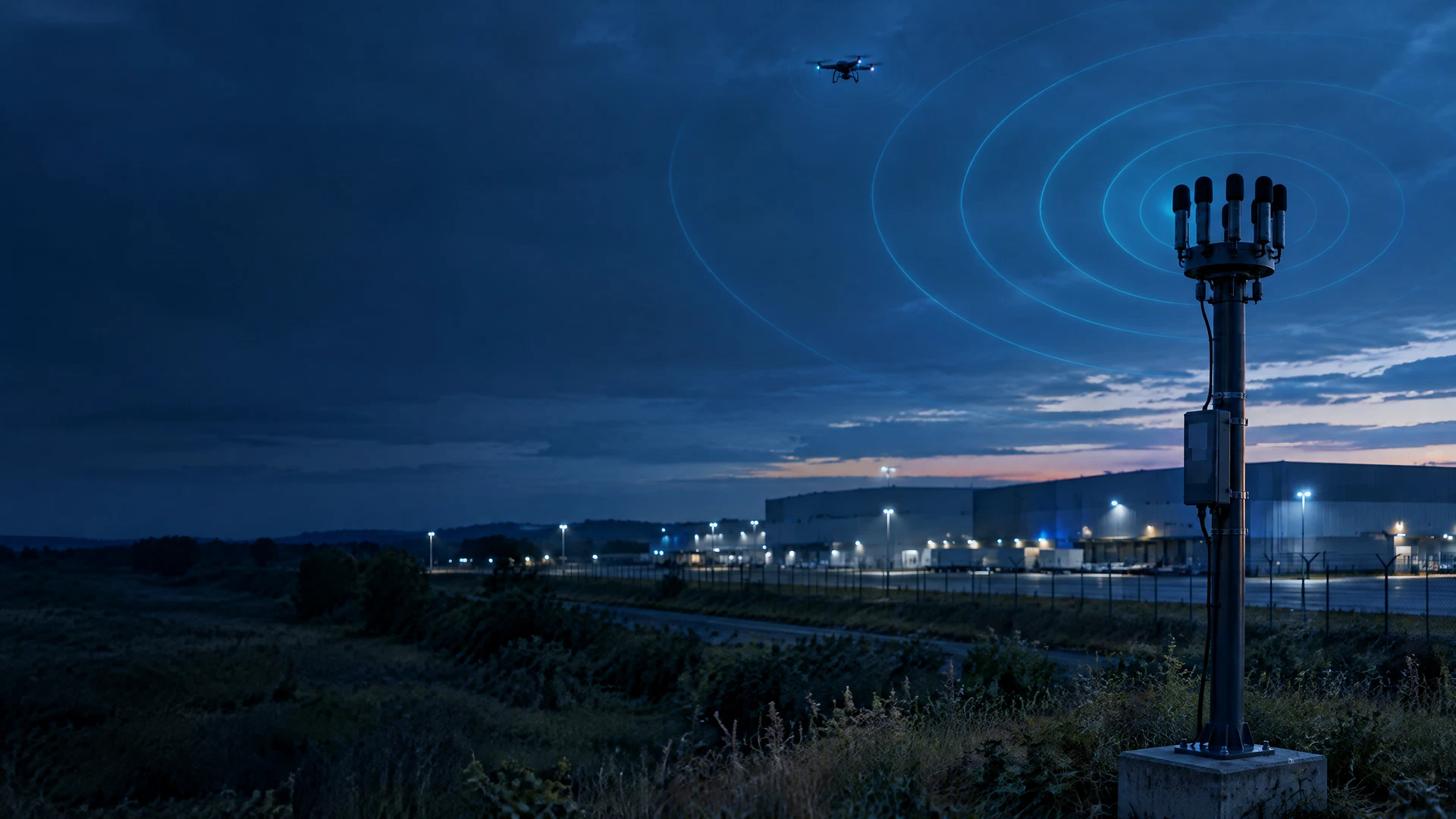
Passive microphone array at an industrial perimeter

Illustrative deployment scenario

Industrial perimeter early-warning layer

A passive microphone-array node can add discreet awareness around logistics roads, warehouse edges, and selected asset boundaries. Acoustic indications may then be shared with visual verification workflows for operator review.

NEW ARK

Early awareness for complex civil airspace

Every aircraft produces a characteristic acoustic signature. New Ark combines multi-array sound capture, direction-of-arrival processing, and trained acoustic classification to provide an early-warning layer for low-altitude security teams. The platform can be deployed as a single local sensor node or as part of a distributed acoustic fence.

Discuss acoustic detection

System capabilities

Core capabilities

Passive sensing

Detects acoustic signatures without active RF or radar emissions from the sensing node.

AI acoustic recognition

Classifies characteristic UAV sound patterns to support faster operator assessment.

Multi-array coverage

Combines directional arrays for broad coverage and practical source-direction awareness.

Open-system integration

Supports layered deployment with EO, thermal, AI tracking, and command-and-control workflows.

Applications

Typical deployment environments

Airport perimetersIndustrial parksPorts and logistics yardsEnergy facilitiesPublic-event venuesBorder and remote sites

Build a layered detection architecture

Acoustic detection can provide a discreet and scalable first layer in a wider low-altitude security architecture. New Ark works with integrators and operators on OEM, ODM, and site-adapted deployments.

Frequently asked questions

Acoustic drone detection FAQ

Does acoustic detection transmit RF or radar signals?

No. The sensing layer listens for characteristic sound patterns and does not require an active RF or radar emission from the microphone node.

Can the system operate with other sensors?

Yes. Acoustic indications can support operator workflows with EO, thermal, AI tracking, or command-and-control systems.

Which sites are suitable for deployment?

Common civil applications include industrial parks, ports, energy facilities, airport perimeters, and protected outdoor sites.

WhatsApp Us